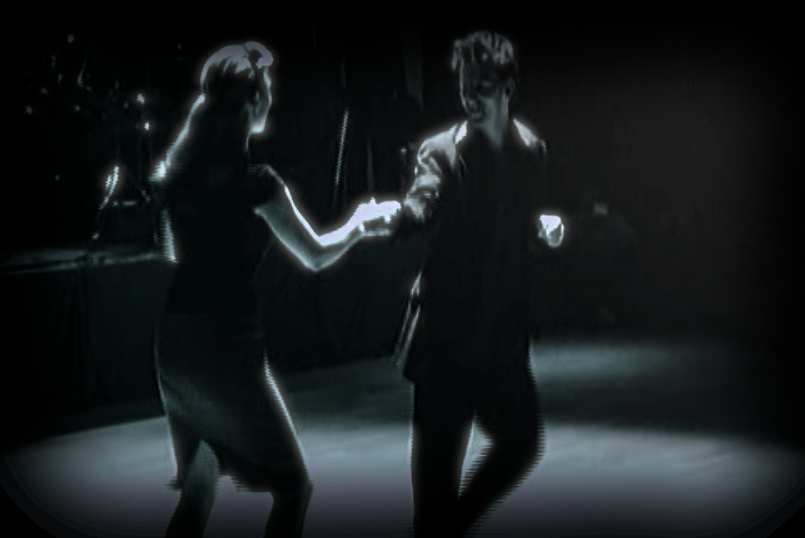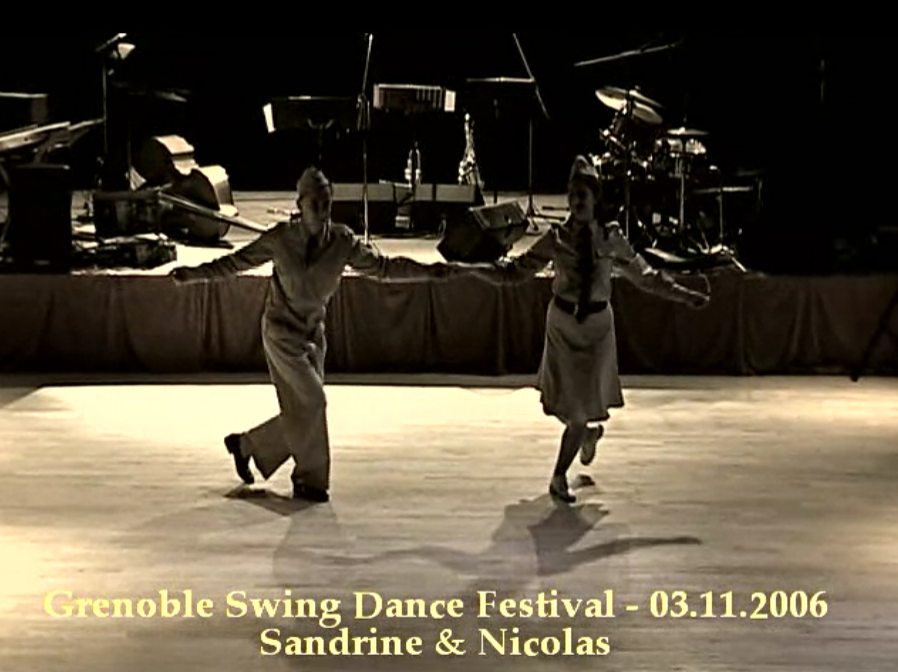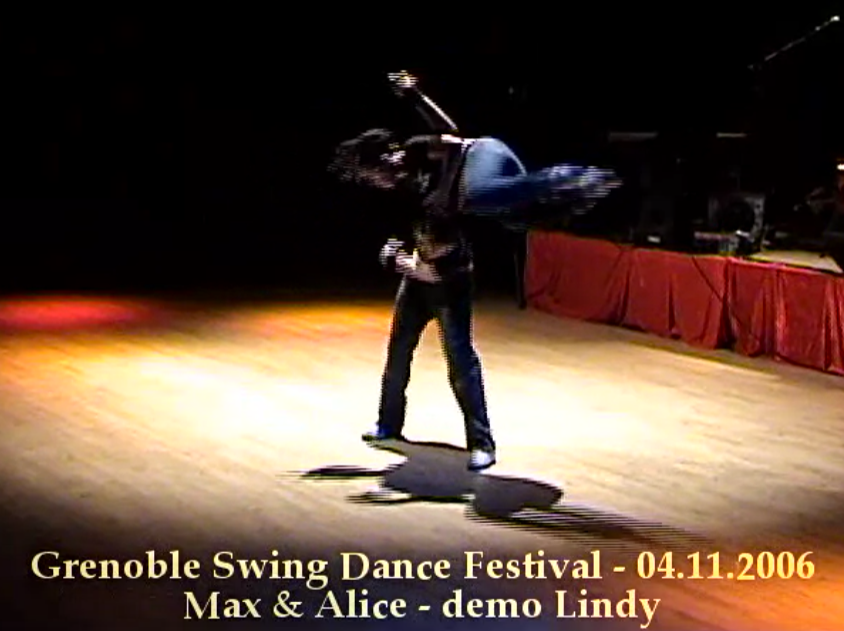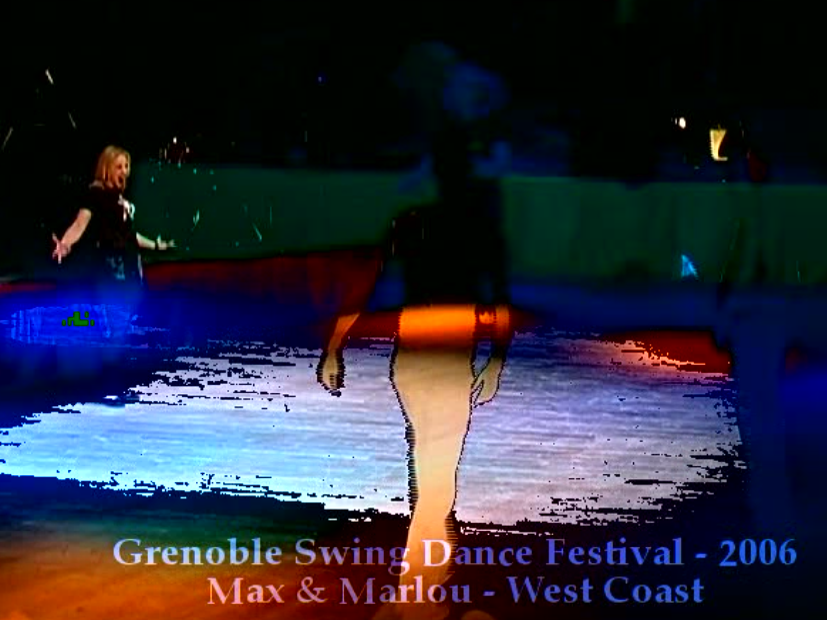
While most material about the documentary film project on the Genesis & Genealogy of the Lindy Hop in France is available in French some sections exist also only in English (namely sample questions for interviews).
If you have a login & password you should be able to access restricted stuff relevant to your profile (e.g. if you have been interviewed you'll find a contract of intents in English for download as well as details regarding approval of the pre-release bearing a time code).
Bien que le projet documentaire portant sur la Génèse et Généalogie du Lindy Hop en France (et plus généralement sur la re-découverte des danses swing en France) soit documenté essentiellement en français certaines sections sont disponibles uniquement en anglais (comme les exemples de questions à certains profs).
Si vous disposez d'un login et mot de passe vous pouvez accéder aux pages en accès restreint (pour en vérifier le contenu avant la mise en ligne disponible à tous si nécessaire, ou pour consulter les contrats et détails de la version pre-release du documentaire avec time code pour acceptation).
Des extraits du tournage sont disponible dans la section video.
understanding the Lindy Hop and other swing dances through the portraits of its French genealogy
the title 'Dance on Swing' is meant to be less restrictive than 'Lindy Hop'; it addresses a wider spectrum of both non-initiated dancers and dancers discovering or dancing on swing music
the documentary tackles the Lindy Hop in France as it is danced by the French and how it is developing - American history as well as the revival of the dance are only briefly broached through a few interviews & archived footage
the documentary does not cover a single, particular event; it focuses on the historical, musical, technical, social and cultural aspects of the Lindy Hop as thoroughly as possible
the film witnesses in an impartial way the efforts made by leading actors and talents of the French swing scene to share a common passion; it is reminiscent of a wedding photography
the narrative underlines current trends: dancing on swing music does not mean dancing only the Lindy Hop
two documentary films were initially planned to be edited and released onto two distinct DVDs, depending on interest & willingness of potential co-producers. Other scripts already exist to facilitate the narrative breakdown of the initial project
as the post-production of DVD #2 is reaching an end it is clear however there will most likely be only one version (i.e. #2)
the DVD #2 is co-produced by Duncan Potter & Thomas Blacharz ('Tommy' from Montpellier)
DVD #1: the documentary film focuses on the French 'pioneers' of the Lindy Hop - DEPRECATED
DVD #2: the documentary film describes actors & keen enthusiasts of the French swing scene; the DVD also features an instruction video shot with Thomas & Alice (from Montpellier)
Audience
DVD #1 addresses schools of dance and dancers who are not yet initiated to swing
DVD #1 is likely to be slightly shorter than #2
perhaps the selling of DVD #2 will raise interest in financing possible re-shots and post-production for DVD #1 - financing this venture is open to potential co-producers
DVD #2 concerns a wider audience of dancers spanning from beginner to advanced levels - contents are likely to be more technical
DVD #2 summarises key issues tackled in the first DVD (by shortening certain interviews with well-known actors of the international swing scene which are less relevant to dancers addressed in the second DVD) and compares the Lindy Hop with other swing dances
Chapter 5 - other dances, the future of the Lindy Hop
dances competing with or complementary to the Lindy Hop
impact of the Lindy Hop - democratisation of jazz, a society which is re-discovering dance, a catchy passion, opportunities of West Coast Style to get dancers into the Lindy Hop
the future of the Lindy Hop - evolutions, confirmations of many kinds of Lindy Hop-s?
a social dance or only for the elite?
current trends: dancing on swing music does not mean dancing only the Lindy Hop (integration of Charleston, Shag, Balboa, Blues...)
this is not a hand-held reportage, a poorly-lit coverage like too many festival DVDs or a documentary film seeking sensational stuff. Metaphors used occasionally in interviews aim at making dancers' feelings more tangible and triggering curiosity of newcomers in the dance.
the mushrooming of the Lindy Hop and swing dances across France is materialised by a 3D animation of a map showing in chronological order how many new workshops & festivals have been created. A similar effect is implemented on a calendar to echo the growing frequency of swing events
covering different festivals across France is the opportunity to show how dancers keep moving from one region to another and hence suggest the mobility and promotion of swing dances
non-narrative sequences help linking the chapters of the narrative; their role consists also in suggesting - in sometimes a rather poetic way - a given aspect of the community of dancers
to illustrate the problem - not to say the absurdity - of trying to put a name on a given style a particular sequence is progressively filled up with all sorts of buzzwords; they hide the faces of the persons being interviewed while their voices fade out.
Old School Lindy
Old-timers' Lindy
Savoy style
1st generation
pioneer generation
Swing Old Style
Swing Zazou
Deans Collins style
Hollywood style
Smooth
Boogie Hop
West Coast style
the coverage of occasional conferences is required only to illustrate the action of promoting a better appraisal of the dance and not to reproduce their exact presentation by the lecturer
subtitles are available in a series of languages and include details concerning the name of the event, location & dates of its happening
as the editing of the documentary film must chunk teachers' demos the DVD should also feature a section giving the opportunity to watch the integrity of these demos. This is regarded as a tribute to their work and it should encourage viewers to purchase the teachers' DVD where the demo comes from (subject to teachers' approval, costs of rights, and space available on the media)
the narrative of the documentary may include extracts from teachers' respective DVDs if relevant (subject to teachers' approval, costs of rights, and space available on the media)
the documentary film is accompanied by an instruction video on the same DVD release. It is shot with Thomas Blacharz ('Tommy' from Montpellier) & Alice Mei. The script of the video is available in French
it draws attention to lead follow techniques, the need to bounce on bouncy music and remain smooth on smooth music, and suggests in a humorous manner the evolution of Mankind in the dance (starting from walking, dragging & pulling, through bouncing together, to dancing French rock'n roll, Boogie and eventually the Lindy Hop)
it makes tangible the need of dancing to the music rather than forcing the music to fit the dance
the multiplying effects of Black & White culture teasing
1. how Black bottom caricatured white masters (Cake Walk, rock-step as a form of reverence, some attitudes in shim-sham...)
2. how WASP attempted to turn the Lindy Hop into a more 'decent-looking' jitterbug (more upright position, horizontal gliding aka Dean Collins style...)
3. how jazz musicians challenged the White with bebop
4. how post-war dancers switched to Jive / East Coast Swing
is the conflict of preserving a genuine image of the Lindy Hop obsolete / irrelevant?
it's less fun dancing only Savoy style Lindy, or Dean Collins style, or even Boogie
people have been trying to fit the music to the dance while it should be the opposite
in the days of the Savoy Ballroom it was relevant to dance with a strong bounce; today a good dancer should be able to dance to all kinds of swing music, hence occasionally with a slightly different technique?
(...)
when dancing in France (and / or around the world) do you feel some people shun aside a given technique to the detriment of musicality?
some dancers tend to be proficient only in one style?
some dancers believe it's not 'proper' Savoy style Lindy, Smooth style or Dean Collins style, and hence limit themselves to using either little or much connection / tension?
some dancers simply aren't aware of further opportunities to interpret their musicality or voice their will to learn more about other styles?
(...)
how do you interpret your musicality?
being able to bounce on a rhythmical & lively piece of music (e.g. with breaks, aerials & more use of Charleston)
being able to 'glide' on a smooth tune (e.g. using connection & tension to stretch & speed up some moves)
being able to pulsate & groove on blues (e.g. by using more body connection & lead-follow)